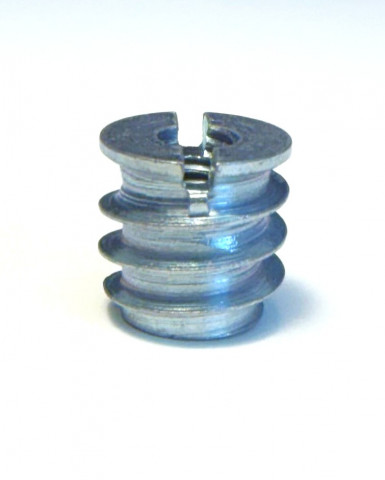
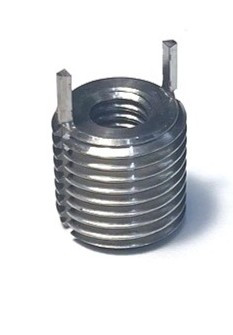
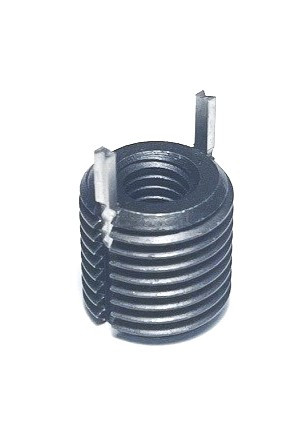
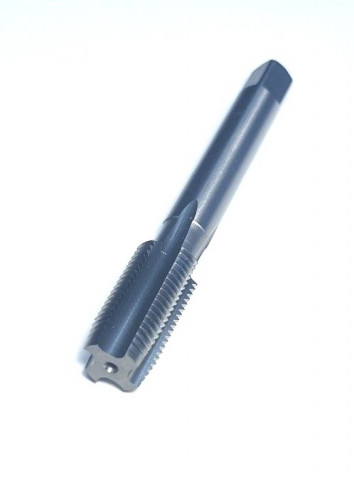
Self tapping slotted insert


What is a self-tapping insert?
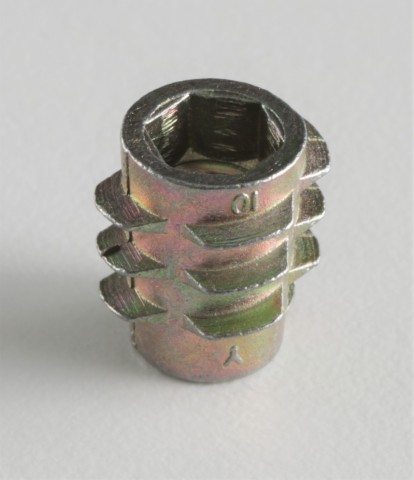
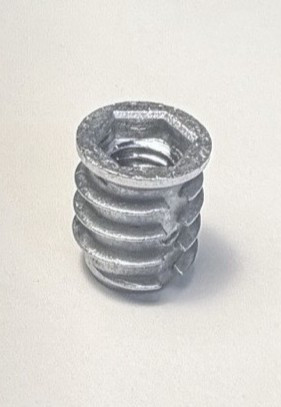
A slotted self-tapping insert is a metal insert which, thanks to the combination of a cutting slot and a special external thread, cuts its own internal thread in a pre-drilled hole.
Available in materials such as hardened zinc-plated steel, brass, stainless steel 303 and 316.
Description
Specifications
Advantages and application areas
Advantages compared to traditional threaded inserts
-
Only a pre-drilling needed — tapping beforehand is not required.
-
Self-anchoring by cutting its own thread, so no bonding or adhesive is required.
-
Strong and wear-resistant internal thread, ideal for softer base materials.
Applications in various materials
Can be used for example in:
-
Untempered steel
-
Exotic hardwood
-
Cast iron
-
Thermoplastics
Technical specifications
-
Diameter range: M2 to M24.
-
Materials: brass, hardened steel white-zinc plated, stainless steel A2/A4.
-
Other surface treatments available on request.
Installation process
Step-by-step assembly
-
Drill a central hole with appropriate diameter and provide a chamfer.
-
Screw the insert in with the cutting groove directed toward the drilled hole. This can be done manually using a hexagon bolt + two nuts locked against each other, or mechanically with installation tool.
-
Install completely into the hole, remove the tool so the insert anchors correctly.
Download PDF
9400_insert_auto_taraudant_fendu.pdfFrequently asked questions about Self tapping slotted insert
How to install a self-tapping slotted threaded insert?
Ensure the correct drilling diameter and provide a chamfered entry to facilitate smooth insertion.
Place the self-tapping insert onto a suitable installation tool (manual or mechanical) with the cutting slot oriented towards the prepared hole. If no dedicated tool is available, use a hex bolt and screw on two hex nuts, locking them against each other so that enough external thread remains to screw the insert onto the bolt.
Screw the insert slowly and straight into the pre-drilled hole.
Stop when the insert is positioned slightly below the surface level. Then unlock the tool and unscrew it carefully.
In which materials and surface finishes are self-tapping inserts available?
-
Hardened steel, white zinc plated (not suitable for outdoor use or aggressive environments)
-
Stainless steel A2: corrosion-resistant, suitable for outdoor and humid conditions
-
Brass: corrosion-resistant, soft material, commonly used in furniture and interior applications
-
Stainless steel A4: highly corrosion-resistant, ideal for salty, chlorinated and aggressive environments
-
Other coatings available on request
In which base materials can slotted self-tapping inserts be used?
These self-tapping threaded inserts are commonly used in cast iron, thermoplastics and exotic hardwoods where strong, durable internal threads are required.
Can a slotted self-tapping insert be used in aluminium?
Yes, but it is recommended to choose a self-tapping version with 3 cutting holes. This reduces deformation and internal stress, while also minimising wear on the installation tool.
What is a self-tapping threaded insert with cutting slot?
A self-tapping threaded insert is a fastening element that creates its own internal thread in the base material thanks to a special external thread design combined with cutting slot. No pre-tapping is required.
However, when used in metal from size M10 upwards, pre-tapping approximately one third of the insert length can improve installation and performance.