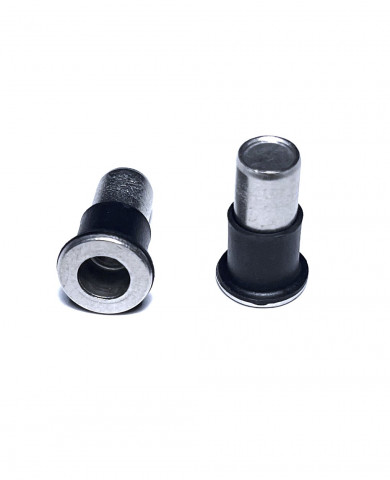
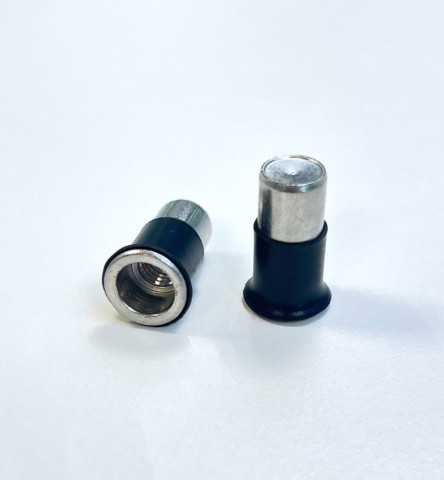
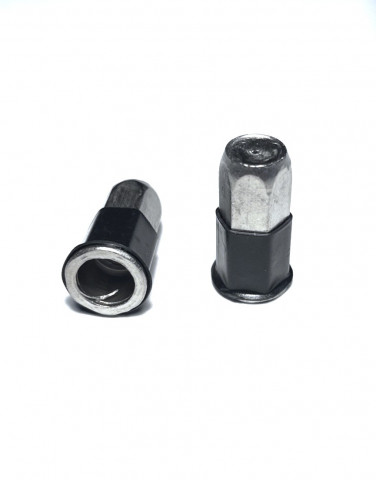
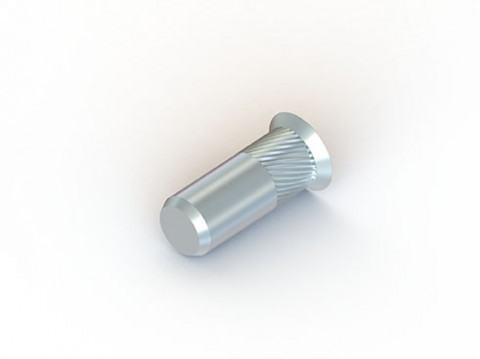
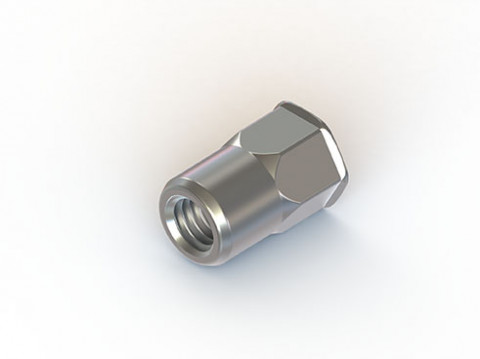
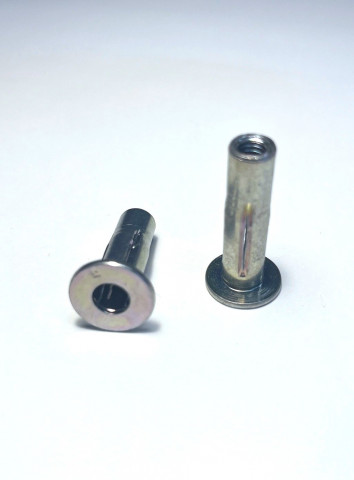
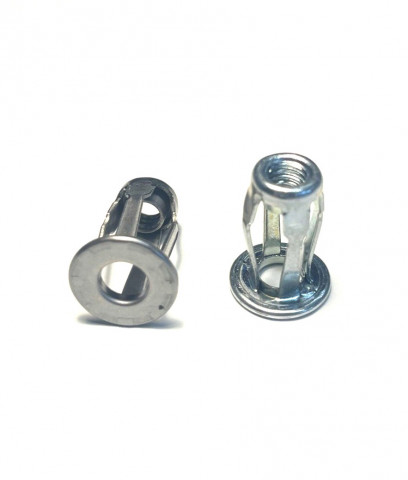
Semi hex self-locking rivet nut


Semi-hex Self-locking Rivet Nut – Deform-Nut® ETC/A & ETFM/A
What is a self-locking rivet nut?
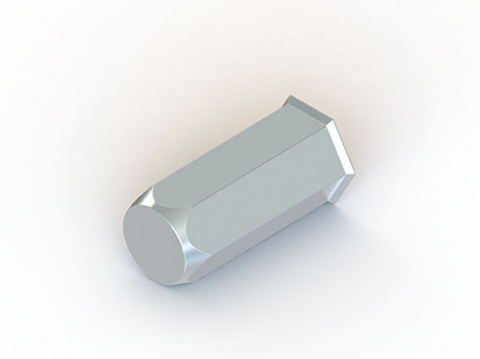
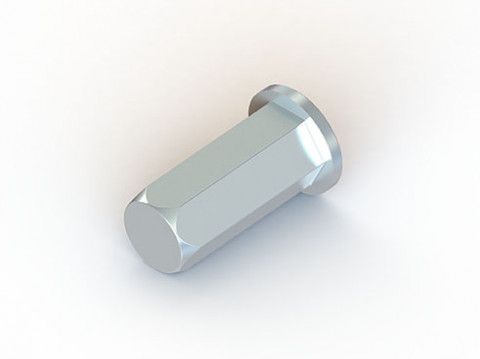
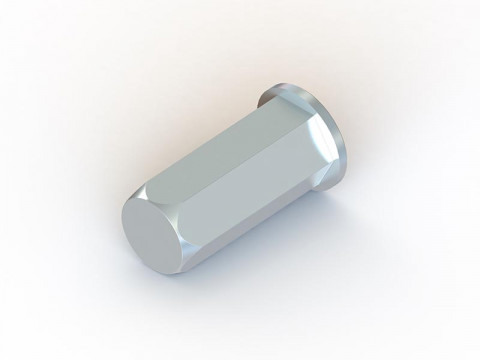
The open semi-hex Deform-Nut® rivet nut with integrated thread-locking nylon ring — developed by Specialinsert® — gives you a secure internal thread in thin sheet metal, while preventing loosening under vibration.
It is available both in zinc-plated steel and stainless steel 304. Two head types are offered: flat head (ETC/A) and reduced-head (ETFM/A).
Installation is easy using a manual, electric or pneumatic rivet-nut tool: the nut deforms behind the sheet, forming a strong, vibration-resistant connection.
Description
Key Features
-
Suitable for sheet thickness from 0.5 mm up to 6.0 mm.
-
Material options: zinc-plated steel or stainless steel 304.
-
Semi-hexagonal body to resist rotation — preventing the nut from turning inside the sheet under torque or vibration.
-
Inner thread immediately usable after installation — no need for tapping.
-
Suitable for blind-side installation (one-sided access), ideal for profiles, enclosures or assemblies where backside is not accessible.
Advantages of Using This Rivet Nut
Reliable, reusable threaded connection
Once installed, it provides a robust internal thread.
Resistant to vibration and loosening
The self-locking nylon ring combined with the semi-hex body prevents loosening and rotation — perfect for environments exposed to vibration or dynamic loads.
Blind-side installation
Allows fastening where only one side of the sheet is accessible — useful for tubular profiles, closed sections or confined assemblies.
Simple and cost-effective assembly
Installation does not require welding or tapping — just a rivet-nut tool and a suitably drilled hole. Reduces labor, avoids heat or distortion, and works even on coated materials.
Recommended Use & Tips
-
Punch the correct hole according to thread size and sheet thickness.
-
Use a rivet-nut tool (manual, pneumatic or electric) to install. Screw the blind rivet nut onto the mandrel of the installation tool without touching the nylon ring.
-
Seat the nut so the head is flush with the sheet surface.
-
Tighten the screw through the self-locking ring — the connection is now set, vibration-resistant and ready for load.
-
For maximum security in vibrating or dynamic applications: verify grip range is correct and retighten if required.
When to Choose Steel vs Stainless Steel
-
Zinc-plated steel — suitable for general indoor applications or where corrosion risk is limited.
-
Stainless steel 304 — recommended for outdoor or where long-term durability is a requirement.
Download PDF
deform_nut_etca_etfma_tcazi_tfmazi.pdfFrequently asked questions about Semi hex self-locking rivet nut
Is the thread locking reusable?
The thread locking ensures retention only once, and then gradually decreases depending on the environmental conditions.